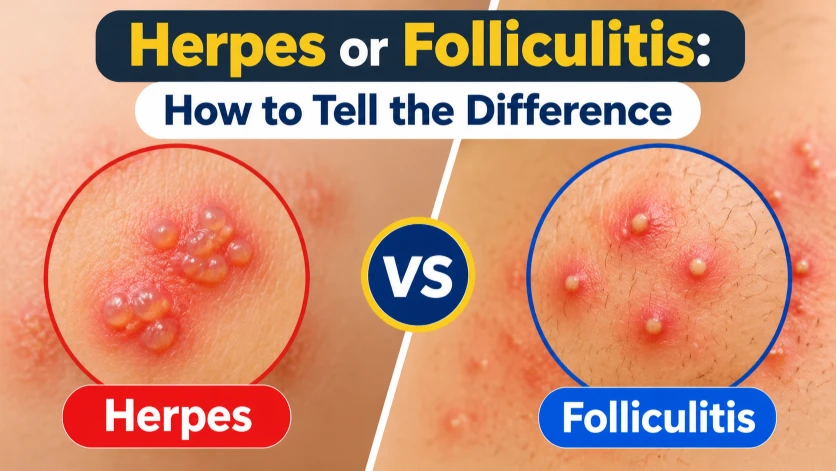
Herpes and folliculitis can both cause red bumps, small blisters, itching, or painful spots on the skin. However, they have different causes. Herpes is a viral infection, while folliculitis is inflammation of hair follicles, often caused by bacteria, irritation, or other factors. Their symptoms can overlap, so appearance alone cannot always tell you which condition you have.
People often search for “herpes or folliculitis” when they notice bumps around the genitals, buttocks, thighs, face, or another area with hair. A bump near a hair follicle may suggest folliculitis, while clusters of painful blisters may suggest herpes. Yet neither pattern proves the diagnosis.
Knowing the differences can help you understand what to look for and when to seek medical care. This guide compares their causes, symptoms, appearance, location, treatment, and prevention. It also explains how healthcare professionals distinguish between the two and which warning signs should not be ignored.
If you have new or unexplained genital bumps, avoid assuming they are harmless or diagnosing them from a photo alone. The safest next step depends on your symptoms and how long they have been present.
Herpes or Folliculitis: Quick Answer
The main difference is the cause and the pattern of the skin changes.
- Herpes: A viral infection that may cause grouped blisters, open sores, tingling, burning, or pain.
- Folliculitis: Inflammation of hair follicles that often causes red bumps or small pimples, sometimes with pus around a hair.
- Both: May cause itching, tenderness, and bumps around the buttocks, thighs, or genital area.
For example, bumps that appear after shaving may point toward folliculitis. Painful blisters that break into shallow sores may suggest herpes. Neither example is enough to confirm a diagnosis.
What Does Herpes or Folliculitis Mean?
What Is Herpes?
Herpes is an infection caused by the herpes simplex virus. The two main types are HSV-1 and HSV-2. Both can cause oral or genital herpes, although HSV-1 commonly causes cold sores around the mouth and HSV-2 commonly causes genital herpes.
Some people develop painful blisters or sores. Others have mild symptoms or no noticeable symptoms at all. When symptoms occur, they may include:
- Small blisters that break into sores.
- Itching, tingling, or burning before an outbreak.
- Pain when urine touches genital sores.
- Tender glands, fever, or body aches during a first outbreak.
Herpes can return because the virus remains in the body. Antiviral medicines can help shorten outbreaks and reduce the chance of passing the virus to a partner. There is currently no cure that removes HSV from the body.
What Is Folliculitis?
Folliculitis is inflammation of one or more hair follicles. A hair follicle is the small opening in the skin from which a hair grows.
It can develop when shaving, waxing, friction, sweat, or tight clothing irritates the follicles. Bacteria and other organisms can also cause it. Some types are linked to yeast rather than bacteria.
Common signs include:
- Small red bumps around individual hairs.
- White-tipped or pus-filled spots.
- Itching, soreness, or mild pain.
- Bumps that appear after shaving or in sweaty areas.
Folliculitis can affect the beard, scalp, chest, back, thighs, buttocks, or groin. Mild cases may improve when the source of irritation is removed, but persistent or severe cases may need medical treatment.
The Origin of Herpes and Folliculitis
These terms come from different medical traditions and describe different conditions.
Herpes comes from a Greek word associated with creeping or spreading. It became a medical term for skin eruptions and is now used for infections caused by herpesviruses, including herpes simplex.
Folliculitis is formed from follicle, referring to a small sac or cavity such as a hair follicle, and the medical suffix -itis, meaning inflammation. The word describes what is happening in the skin rather than naming one specific germ.
These terms are not alternative spellings of the same condition. One names a viral infection, while the other describes inflammation around hair follicles that can have several causes.
British English vs American English
There is no meaningful British-versus-American spelling difference between herpes and folliculitis. Both terms are standard medical English in the United Kingdom, the United States, Canada, Australia, and international medical writing.
| British English | American English | Example |
| Herpes | Herpes | The clinician tested the sore for herpes. |
| Folliculitis | Folliculitis | The bumps may be caused by folliculitis. |
| Genital herpes | Genital herpes | Genital herpes can cause painful sores. |
| Hair follicle | Hair follicle | Folliculitis affects a hair follicle. |
Medical publications may differ in punctuation, spelling of related words, or preferred clinical terminology. However, the names of these two conditions remain the same.
Which Version Should You Use?
Choose the term that accurately describes the condition you mean. Do not choose one simply because the bumps look similar to a photograph.
- United States: Use herpes for an HSV infection and folliculitis for inflammation of hair follicles.
- United Kingdom: Use the same terms. A GP or sexual health clinic can assess unexplained genital sores.
- Canada: Use both standard medical terms and seek clinical advice for new or persistent symptoms.
- Australia: Use the same terminology and consult a GP or sexual health service when needed.
- International writing: Define each term in simple language for readers who may not know medical vocabulary.
- Academic writing: Use the precise diagnosis supported by the evidence. Do not label a rash as herpes or folliculitis without adequate clinical support.
- Business and health writing: Explain the cause, common symptoms, and limits of visual identification. Avoid claiming that a photograph can confirm either condition.
The key is medical accuracy, not regional spelling.
Common Mistakes
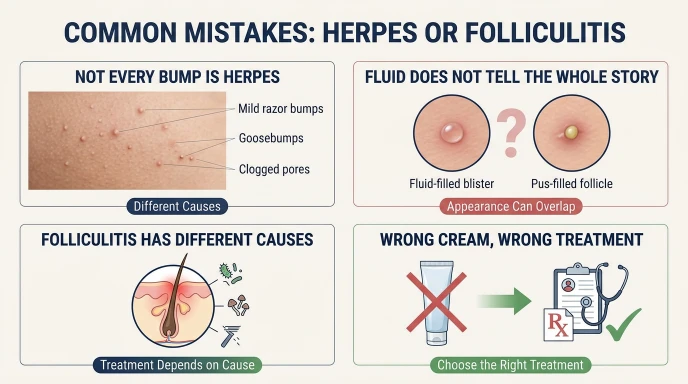
Mistake 1: Assuming Every Genital Bump Is Herpes
Incorrect: “I have a genital bump, so it must be herpes.”
Correct: “A genital bump can have several causes, including folliculitis and herpes.”
Explanation: Ingrown hairs, cysts, irritation, and other skin conditions can resemble herpes. A clinician can assess the symptoms and recommend testing.
Memory tip: A bump is a symptom, not a diagnosis.
Mistake 2: Assuming Pus Always Means Folliculitis
Incorrect: “The spot has fluid in it, so it cannot be herpes.”
Correct: “Fluid-filled blisters or pus-filled bumps need to be assessed in context.”
Explanation: Herpes can produce fluid-filled blisters, while folliculitis can cause pus-filled spots. Their appearance can overlap.
Memory tip: Look at the whole pattern, not just the fluid.
Mistake 3: Assuming Folliculitis Is Always Bacterial
Incorrect: “All folliculitis needs antibiotics.”
Correct: “Folliculitis treatment depends on its cause and severity.”
Explanation: Folliculitis may result from irritation, bacteria, yeast, or other factors. Antibiotics are not appropriate for every case.
Memory tip: Identify the cause before choosing treatment.
Mistake 4: Treating Suspected Herpes With Random Creams
Incorrect: “Any antibacterial or antifungal cream will treat herpes.”
Correct: “Herpes requires appropriate antiviral management when treatment is indicated.”
Explanation: Antibacterial and antifungal products do not eliminate HSV. Using the wrong product may irritate the skin or delay proper care.
Memory tip: Different causes need different treatments.
Everyday Examples
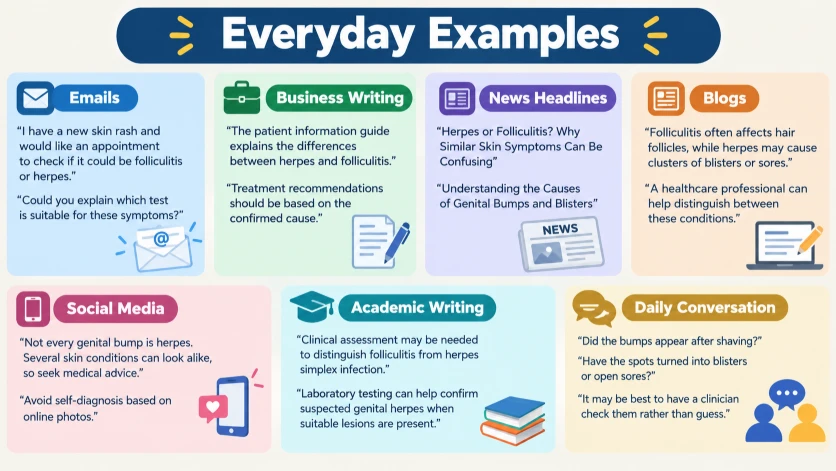
These examples show how to discuss the conditions clearly without claiming a diagnosis based on appearance alone.
Emails
- “I have a new skin rash and would like an appointment to check if it could be folliculitis or herpes.”
- “Could you explain which test is suitable for these symptoms?”
Business Writing
- “The patient information guide explains the differences between herpes and folliculitis.”
- “Treatment recommendations should be based on the confirmed cause.”
News Headlines
- “Herpes or Folliculitis? Why Similar Skin Symptoms Can Be Confusing”
- “Understanding the Causes of Genital Bumps and Blisters”
Blogs
- “Folliculitis often affects hair follicles, while herpes may cause clusters of blisters or sores.”
- “A healthcare professional can help distinguish between these conditions.”
Social Media
- “Not every genital bump is herpes. Several skin conditions can look alike, so seek medical advice.”
- “Avoid self-diagnosis based on online photos.”
Academic Writing
- “Clinical assessment may be needed to distinguish folliculitis from herpes simplex infection.”
- “Laboratory testing can help confirm suspected genital herpes when suitable lesions are present.”
Daily Conversation
- “Did the bumps appear after shaving?”
- “Have the spots turned into blisters or open sores?”
- “It may be best to have a clinician check them rather than guess.”
These examples help readers describe symptoms accurately while leaving diagnosis to a qualified healthcare professional.
Google Trends and Modern Usage
People search for “herpes or folliculitis” because both conditions can cause bumps, itching, redness, or sores. Many want to know if a rash is related to shaving, an infection, or possible sexual exposure.
Common related searches include:
- Herpes vs folliculitis pictures
- Folliculitis or herpes on the genitals
- Herpes or ingrown hair
- Folliculitis on the pubic area
- How to tell herpes from pimples
- Can folliculitis look like herpes?
These searches reflect common questions, not confirmed diagnoses or measured search volumes.
Google Trends can help compare interest by region and over time. However, it uses normalized search data rather than a complete count of searches. Without a defined location, date range, and direct comparison, it would be misleading to claim that one term is currently more popular than the other.
For an article, focus on answering the real concern behind the query: how the conditions differ, what symptoms deserve attention, and how a diagnosis is confirmed.
Quick Comparison
| Feature | Herpes | Folliculitis |
| Main cause | Herpes simplex virus | Inflamed hair follicles |
| Typical appearance | Grouped blisters or open sores | Red bumps or pus-filled spots |
| Common feeling | Tingling, burning, or pain | Itching, tenderness, or irritation |
| Hair connection | Not caused by hair follicles | Often centered on hair follicles |
| Common locations | Mouth, genitals, anus, nearby skin | Beard, scalp, thighs, buttocks, groin |
| Can return? | Yes, outbreaks can recur | Yes, especially if triggers remain |
| Treatment | Antiviral medicines when appropriate | Depends on the cause |
| How to confirm | Lesion testing when appropriate | Clinical assessment and tests when needed |
Important: These are typical patterns, not strict rules. Herpes may look like a pimple or ingrown hair, and folliculitis may cause painful bumps. Appearance alone cannot reliably confirm either condition.
Key Takeaways
- Herpes is caused by HSV-1 or HSV-2.
- Folliculitis is inflammation of hair follicles.
- Herpes may cause clusters of blisters that develop into sores.
- Folliculitis often causes bumps around individual hairs.
- Shaving, sweat, and friction can trigger folliculitis.
- Both conditions can cause itching, pain, and redness.
- Genital sores should be assessed by a healthcare professional.
- A swab of a fresh suspected herpes lesion can help confirm the diagnosis.
FAQs
How Do I Know If I Have Herpes or Folliculitis?
Herpes often causes painful blisters or sores that may appear in clusters, while folliculitis usually causes small red bumps or pimples around hair follicles. Folliculitis may itch or feel tender, and some bumps contain pus. However, their appearance can overlap, so a healthcare professional may need to examine the area or perform a herpes swab test to confirm the cause.
How to Take Care of Herpes at Home?
You can manage herpes symptoms at home by keeping the affected area clean and dry, wearing loose-fitting clothing, and applying a cool compress to ease discomfort. Avoid picking or scratching sores, and wash your hands after touching the affected area. Antiviral medicines prescribed by a healthcare professional can help shorten outbreaks and reduce symptoms. Avoid sexual contact while sores are present.
Can I Live a Normal Life With Herpes?
Yes, you can live a normal, healthy life with herpes. Herpes is a common viral infection that can be managed with antiviral medication when needed. Some people experience occasional outbreaks, while others have few or no noticeable symptoms. Open communication with partners, safer sex practices, and medical guidance can help reduce the risk of transmission.
How to Clean Herpes Lesions?
Gently clean herpes lesions with lukewarm water and mild, unscented soap if tolerated. Pat the area dry with a clean towel rather than rubbing it. Avoid alcohol, hydrogen peroxide, harsh antiseptics, and fragranced products because they may irritate the sores. Do not pick at scabs, and wash your hands before and after caring for the area. Seek medical advice if you notice worsening redness, swelling, pus, or fever.
What Are the 7 Warning Signs of Herpes?
Seven possible signs of herpes include:
- Tingling, itching, or burning before sores appear.
- Small blisters that may occur in clusters.
- Painful open sores or ulcers.
- Redness or irritation around the affected area.
- Pain or burning during urination, especially when urine touches sores.
- Tender or swollen lymph nodes, particularly during an initial outbreak.
- Flu-like symptoms, such as fever, body aches, or headache, during a first outbreak.
Some people with herpes have no noticeable symptoms. These signs can also occur with other conditions, so testing is important for an accurate diagnosis.
Is Herpes Folliculitis Curable?
Herpes and folliculitis are different conditions, so their treatments and outcomes differ. Herpes has no currently available cure, but antiviral medicines can control outbreaks and reduce the risk of transmission. Folliculitis is often treatable and may resolve completely, depending on its cause. Mild cases may improve with gentle cleansing and warm compresses, while bacterial or fungal folliculitis may require specific medication. A healthcare professional can help determine which condition you have and recommend appropriate treatment.
Conclusion
Understanding the difference between herpes and folliculitis starts with knowing their causes. Herpes is a viral infection that may cause blisters, painful sores, tingling, or recurring outbreaks. Folliculitis affects hair follicles and often appears as red bumps or pus-filled spots, particularly after shaving, sweating, or friction.
These patterns can help you understand your symptoms, but they cannot confirm a diagnosis. Some herpes infections are mild, and folliculitis can also cause significant discomfort. If you notice new genital bumps, blisters, or open sores, arrange a medical assessment. A swab test from a fresh lesion can help identify herpes, while a clinician can assess if the rash is folliculitis or another skin condition.
Avoid squeezing the bumps, shaving over the affected area, or applying random creams. If herpes is possible, avoid sexual contact until you have received medical advice and any active sores have healed.
Remember: Similar-looking bumps can have different causes, so a correct diagnosis is more useful than a guess. If this guide helped clarify the differences, share it with someone who may find the information useful.
READ MORE!
- Porcelain vs Ceramic: What’s the Difference?
- CGC vs PSA: What’s the Difference and Which Is Better?
- Miconazole vs Clotrimazole: What’s the Difference?

I’m Edward Fletcher, a UK-based English language writer with a passion for grammar and vocabulary. At VocabNex, I share simple explanations, useful examples, and practical English tips to help learners improve their language skills and communicate with confidence.







