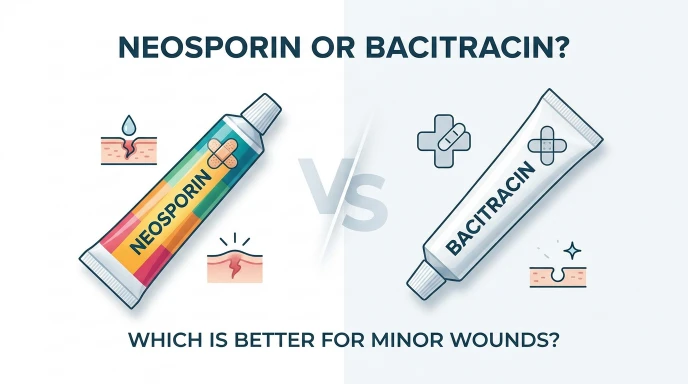
Neosporin is a brand-name antibiotic ointment, while bacitracin is one antibiotic ingredient used in some topical products.
For most minor cuts and scrapes, neither Neosporin nor bacitracin is automatically the best choice; simple cleaning and petroleum jelly are often enough, while antibiotic ointments may be used in selected cases.
People search for “Neosporin or bacitracin” because both products are common first-aid choices, yet they are not the same medicine. The main confusion is simple: bacitracin is one antibiotic ingredient, while Neosporin is a brand name used for products that can contain several ingredients.
For example, the classic Neosporin Original ointment contains bacitracin, neomycin, and polymyxin B. Bacitracin ointment contains bacitracin as its active antibiotic.
This guide explains the difference in plain language. It also covers what each product means, its history, common mistakes, everyday usage, and search trends. Most importantly, it explains when an antibiotic ointment may be useful and when professional medical care is better.
Medical note: This article is general information, not a diagnosis or personal treatment plan.
Neosporin or Bacitracin: Quick Answer
Bacitracin is a single topical antibiotic. Neosporin is a brand with several formulations, including the classic three-antibiotic product.
| Product | What it is | Common ingredients |
| Bacitracin | Single antibiotic | Bacitracin |
| Neosporin Original | Brand-name triple antibiotic ointment | Bacitracin + neomycin + polymyxin B |
| Simply Neosporin | Brand-name antibiotic ointment | Bacitracin + polymyxin B |
| Neosporin + Pain Relief | Antibiotic product with a pain-relief ingredient | Formulation varies |
Neosporin’s own information confirms that its products can contain different combinations of active ingredients.
For a small, clean cut, the American Academy of Dermatology recommends washing the wound, keeping it moist with petroleum jelly, and covering it. It generally advises against routine topical antibiotics because they can irritate the skin.
Definition and Meaning of Neosporin or Bacitracin
What is Neosporin?
Neosporin is a brand name for topical products used for minor skin injuries. The classic Neosporin Original antibiotic ointment contains:
- Neomycin sulfate
- Bacitracin zinc
- Polymyxin B sulfate
These antibiotics work against bacteria that can cause infection.
However, not every Neosporin product has exactly the same ingredients. Always read the Drug Facts label.
What is bacitracin?
Bacitracin is an antibiotic that can be applied to the skin. It is commonly used to help prevent infection in minor cuts, scrapes, and burns.
The simple meaning
The easiest way to remember the difference is:
Bacitracin = an antibiotic ingredient/drug.
Neosporin = a brand name for topical products.
So, asking “Neosporin or bacitracin?” is not quite like asking about two identical products.
The Origin of Neosporin or Bacitracin
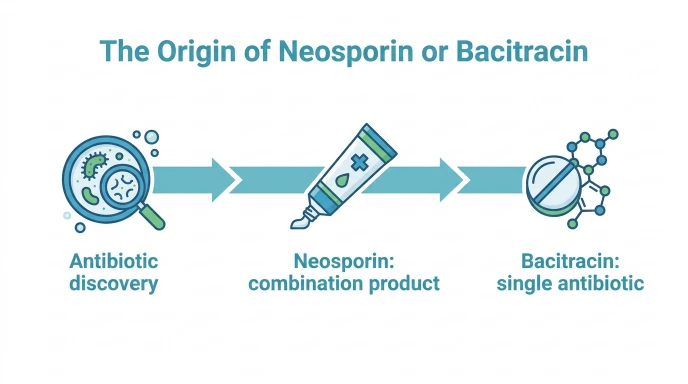
The two names have very different histories.
Where did “bacitracin” come from?
Bacitracin was discovered during research on contaminated wounds. In the 1940s, researchers found an antibiotic-producing strain of bacteria in tissue from the leg injury of a young girl named Margaret Tracey.
The name bacitracin was formed from Bacillus and part of the girl’s surname, Tracey, with the ending -in. Merriam-Webster dates the word’s first known use to 1945.
Where did “Neosporin” come from?
Neosporin developed as a brand name for antibiotic products. Historical records show the Neosporin name in commercial use by the early 1950s.
Unlike “bacitracin,” Neosporin is not a spelling variation of a medical ingredient. It is a proprietary brand name.
That distinction is important for understanding the keyword.
British English vs American English Spelling
Unlike many English words, Neosporin and bacitracin do not have a major British-versus-American spelling difference.
The standard spellings are generally:
- American English: Neosporin, bacitracin
- British English: Neosporin, bacitracin
| Term | American English | British English | Difference |
| Neosporin | Neosporin | Neosporin | No major spelling change |
| Bacitracin | bacitracin | bacitracin | No major spelling change |
| Antibiotic | antibiotic | antibiotic | Same |
| Ointment | ointment | ointment | Same |
People may search for different forms because of pronunciation, typing habits, brand familiarity, or regional product names. But “Neosporin” vs “bacitracin” is a product distinction, not a British/American spelling distinction.
Which Spelling Should You Use?
For online content, medical writing, and everyday communication, use:
- Neosporin when referring to the brand.
- bacitracin when referring to the antibiotic.
- topical antibiotic ointment when speaking generally.
If your audience is in the United States, “Neosporin” is widely recognized as a consumer brand. In other countries, people may know different brands or may search by the generic ingredient instead.
For professional health writing, generic drug names should be used accurately. If you mean bacitracin, write “bacitracin” rather than using “Neosporin” as a generic word.
Common Mistakes with Neosporin or Bacitracin
Mistake 1: Treating them as the same product
Incorrect: “Neosporin is just bacitracin.”
Correct: Neosporin is a brand, while bacitracin is an antibiotic ingredient.
Mistake 2: Assuming every Neosporin product has the same formula
Neosporin sells different formulations. Check the label before use.
Mistake 3: Using antibiotic ointment on every small cut
The American Academy of Dermatology recommends petroleum jelly rather than routine topical antibiotics for many minor cuts.
Mistake 4: Using it on serious injuries
Bacitracin labels advise medical advice for deep or puncture wounds, animal bites, and serious burns.
Mistake 5: Ignoring skin reactions
Topical antibiotics can cause allergic or irritant skin reactions. Stop use and seek medical advice if a rash or worsening reaction develops.
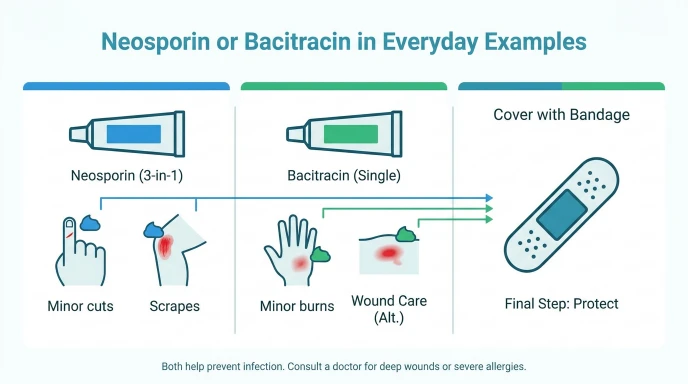
Neosporin or Bacitracin in Everyday Examples
In an email
“I cleaned the small cut and used the wound-care product recommended by my pharmacist.”
This is better than casually saying “I used Neosporin” when the exact product is unknown.
In a news article
“The patient was advised to clean the wound and monitor it for signs of infection.”
Professional writing usually favors precise medical terms.
On social media
“Neosporin or bacitracin which one do you use for minor cuts?”
This is a common consumer-style use of the keyword.
In formal writing
“Bacitracin is a topical antibiotic used for certain minor skin injuries.”
This wording clearly identifies the generic medicine.
Neosporin or Bacitracin: Google Trends & Usage Data
Search interest around “Neosporin or bacitracin” is mainly driven by consumer health questions, first-aid searches, and comparisons between topical antibiotic products.
A key point for content writers is that “Neosporin” and “bacitracin” represent different search intents:
| Search term | Likely intent |
| Neosporin | Product or brand search |
| Bacitracin | Generic medicine search |
| Neosporin or bacitracin | Comparison search |
| Neosporin vs bacitracin | Comparison/search intent |
| Bacitracin for cuts | Usage intent |
| Neosporin for cuts | Usage intent |
Search behavior also varies by country because brand availability differs. In the United States, Neosporin is a highly recognizable consumer brand, while international users may be more likely to search for generic drug names or local brands.
Important: Google Trends provides relative search interest rather than a simple number of searches. Public results should therefore be treated as indicators of search behavior, not medical evidence or proof that one product is better.
For content, the strongest approach is to answer the comparison question immediately and then explain the brand-versus-generic difference.
Neosporin or Bacitracin: Comparison
| Feature | Neosporin | Bacitracin |
| Type | Brand | Generic antibiotic |
| Main purpose | Minor wound care products | Minor wound infection prevention |
| Ingredients | Depends on product | Bacitracin |
| Classic formula | Bacitracin + neomycin + polymyxin B | Bacitracin |
| OTC availability | Many products | Common OTC topical form |
| Same as the other? | No | No |
| Allergy concern | Possible, depending on ingredients | Possible |
| Best source for exact ingredients | Product label | Product label |
The classic Neosporin formulation contains three antibiotics, while topical bacitracin is a single-antibiotic product.
FAQs About Neosporin or Bacitracin
What is better, Neosporin or bacitracin?
Neither is always better. The right choice depends on the wound and individual skin sensitivity.
Why do doctors recommend bacitracin?
Bacitracin may be recommended for preventing infection in minor cuts and scrapes.
What is the best antibiotic ointment?
There is no single best option for everyone. The choice depends on the wound and risk of skin irritation.
Why don’t doctors recommend Neosporin anymore?
Some doctors avoid Neosporin because neomycin can cause skin irritation or allergic reactions in some people.
Does bacitracin heal wounds faster?
Bacitracin may help prevent infection, but it does not necessarily make wounds heal faster.
What is Neosporin used for?
Neosporin is a topical antibiotic ointment used to help prevent infection in minor cuts, scrapes, and burns.
Conclusion
Neosporin and bacitracin are related, but they are not the same thing. Bacitracin is a topical antibiotic, while Neosporin is a brand that sells several wound-care products. Classic Neosporin Original contains bacitracin, neomycin, and polymyxin B.
The most important point is that “Neosporin or bacitracin” is a product comparison, not a spelling question. Neither term is a British or American spelling variant of the other.
For many simple cuts, good wound care starts with gentle cleaning, petroleum jelly, and a clean bandage. The American Academy of Dermatology advises against routine topical antibiotics for many minor cuts because they can irritate the skin.
If you use a topical antibiotic, read the label carefully and check its active ingredients. Avoid using these products for deep wounds, punctures, animal bites, serious burns, or large injuries without medical advice. If redness, swelling, pain, pus, or other infection signs develop, contact a healthcare professional.
READ MORE!
Cake or Pie: What’s the Difference?

I’m Edward Fletcher, a UK-based English language writer with a passion for grammar and vocabulary. At VocabNex, I share simple explanations, useful examples, and practical English tips to help learners improve their language skills and communicate with confidence.








2 thoughts on “Neosporin or Bacitracin: Which One Is Better for Minor Wounds?”